
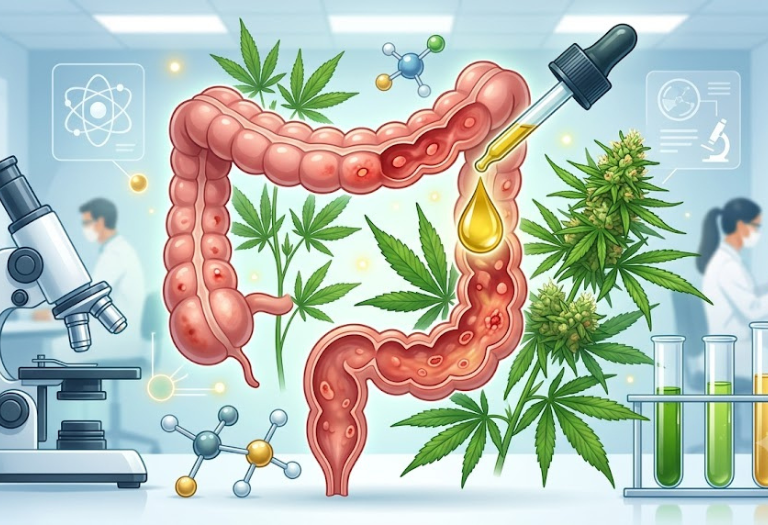
When Ulcerative Colitis Starts Running Your Day
It can be difficult to make plans when you never know what your stomach or bowel will do next.
An urgent trip to the bathroom. Cramping that appears without warning. Blood in the stool. Fatigue that makes an ordinary day feel exhausting.
Ulcerative colitis is more than occasional digestive discomfort. It is a chronic inflammatory bowel disease that causes inflammation and ulcers in the inner lining of the large intestine. Symptoms can disappear during remission and return during flares. (NIDDK)
For some people, controlling the disease means managing both the physical symptoms and the stress that comes with them.
That has led some patients to consider complementary options such as medical cannabis.
But can cannabis actually help ulcerative colitis—and where does it fit when controlling inflammation remains the priority?
What Is Ulcerative Colitis?
Ulcerative colitis (UC) is a chronic inflammatory bowel disease affecting the colon and rectum. Abnormal immune activity contributes to inflammation and ulcer formation along the intestinal lining. (NIDDK)
- Common symptoms include:
- Frequent diarrhea
- Rectal bleeding or blood in the stool
- Abdominal cramping and pain
- Urgent bowel movements
- Mucus or pus in the stool
- Tenesmus, or the feeling that you still need to have a bowel movement
- Fatigue
- Weight loss in more severe disease
- Symptoms can range from mild to severe. Some people experience long periods of remission before another flare occurs. (NIDDK)
The important distinction: controlling symptoms and controlling inflammation are not always the same thing.
Standard Medical Treatment for Ulcerative Colitis

Medical cannabis is not a primary treatment for ulcerative colitis.
The main goal of conventional treatment is to reduce intestinal inflammation, achieve remission, and maintain it over time. Treatment depends on disease severity and how much of the colon is affected. (NIDDK)
Medications such as mesalamine may be used for mild to moderate UC and to help maintain remission.
Steroids can reduce inflammation during certain flares, but they are generally not intended for long-term maintenance because prolonged use can cause significant side effects.
Moderate to severe disease may require medications that modify immune activity, including immunosuppressants or biologic therapies.
Some adults with moderate to severe UC may receive newer small-molecule medications when other treatments are ineffective or poorly tolerated.
When medications fail or serious complications develop, surgery may become necessary. Procedures can involve removal of the colon and rectum, with options such as ileoanal pouch surgery or ileostomy. (NIDDK)
Cannabis belongs in the conversation only as potential supportive care—not as a substitute for therapies designed to control the disease itself.
How Medical Cannabis May Affect Ulcerative Colitis Symptoms
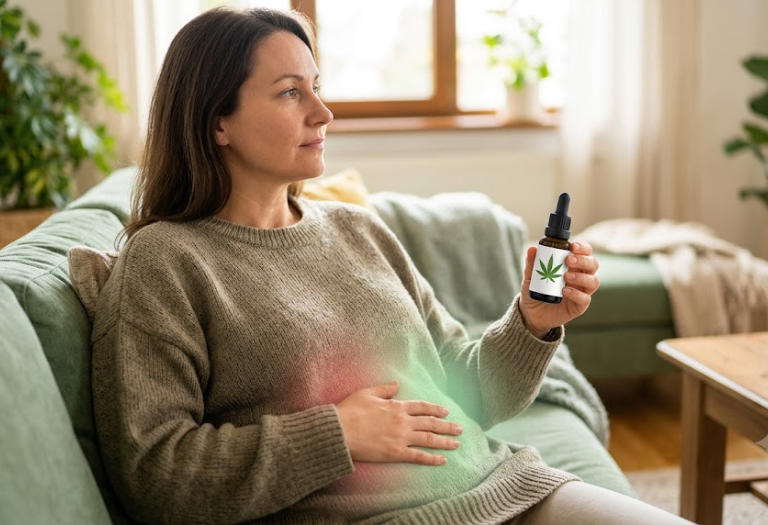
Cannabis contains cannabinoids, primarily THC (tetrahydrocannabinol) and CBD (cannabidiol).
These compounds interact with the body’s endocannabinoid system, which is involved in processes such as pain perception, appetite, nausea, and gastrointestinal function.
THC is the intoxicating cannabinoid. It may influence pain, nausea, and appetite, but can also cause dizziness, impaired concentration, anxiety, or other unwanted effects.
CBD is non-intoxicating and has been investigated for potential effects on pain, anxiety, and inflammation. However, evidence specifically supporting CBD as a treatment for ulcerative colitis remains limited.
A cannabinoid affecting a symptom does not automatically mean it is treating the underlying disease.
Potential Benefits of Medical Cannabis for Ulcerative Colitis
Research remains limited, but studies suggest cannabis may provide symptom-level benefits for some people with IBD.
Some patients report less abdominal discomfort after using cannabis. Cannabinoids may influence pain signaling, potentially making chronic discomfort easier to manage.
Nausea can accompany active digestive disease, medication side effects, or reduced food intake. Cannabis has recognized anti-nausea properties and may help certain individuals.
UC symptoms can reduce appetite and lead some people to eat less than they need. THC may stimulate appetite, potentially making food intake easier for some patients.
Pain, urgency, anxiety, and digestive discomfort can interfere with sleep. Some individuals report improved sleep with cannabis, although responses differ and frequent THC use can eventually affect sleep quality.
A 2024 meta-analysis of randomized trials found cannabinoids were associated with improved quality of life in people with IBD, including UC, although they did not demonstrate improvement in inflammatory markers or endoscopic disease activity. (PubMed)
The potential value may therefore be helping someone feel and function better—not eliminating the inflammation causing UC.
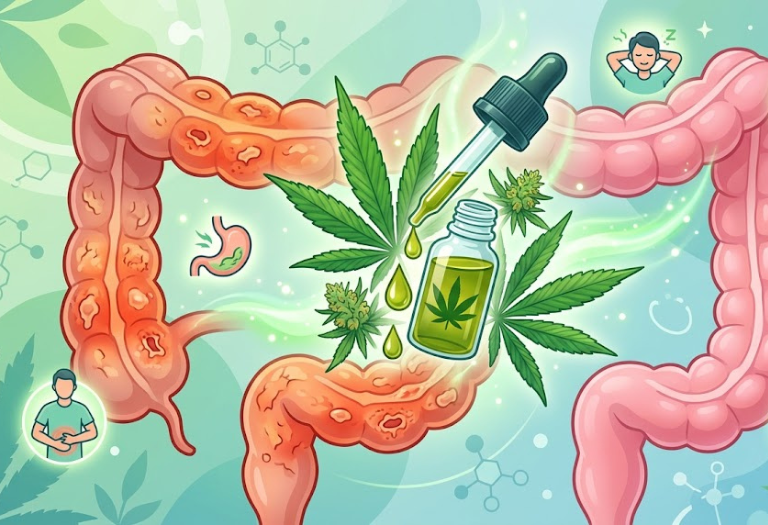
What Research Says About Cannabis and Ulcerative Colitis
This distinction is one of the most important parts of the conversation.
A systematic review of randomized trials found that cannabis and cannabinoids did not provide firm evidence for inducing remission in UC, and adverse events were more common in cannabis groups in some studies. (PubMed)
A later meta-analysis found improvements in quality of life but did not find significant improvement in UC disease activity or objective measures of intestinal inflammation. (PubMed)
The Crohn’s & Colitis Foundation similarly states that small studies have reported improvements in symptoms such as pain, nausea, and appetite, but there is currently no evidence that medical cannabis reduces IBD inflammation or improves disease activity. (Crohn’s & Colitis Foundation)
What that means in practical terms
Potentially helpful: pain, nausea, appetite, sleep, overall comfort.
Not established: healing intestinal ulcers, controlling inflammation, preventing complications, or maintaining remission.
That difference should guide every treatment decision.
Why More Research Is Still Needed
Cannabis research in ulcerative colitis is still developing.
- Researchers need better evidence regarding:
- Which cannabinoids work best
- THC-to-CBD ratios
- Appropriate dosing
- Long-term safety
- Drug interactions
- Effects during active flares
- Effects on objective inflammation
- Whether particular patient groups benefit more than others
- Until stronger evidence is available, cannabis should be approached as adjunctive symptom support rather than disease-modifying treatment.
Cannabis for Ulcerative Colitis: What It May and May Not Do
| Potential role | Current understanding |
|---|---|
| Abdominal pain | May provide symptom relief for some people |
| Nausea | May help certain individuals |
| Appetite loss | THC may stimulate appetite |
| Sleep problems | Some patients report improvement |
| Quality of life | Research suggests possible benefit |
| Intestinal inflammation | Not proven to reduce it |
| Ulcer healing | Not established |
| Remission | Not established as a reliable treatment |
| Disease complications | Does not replace medical management |
Feeling better is valuable—but it should never be mistaken for remission.
Risks and Considerations
Cannabis is not risk-free, particularly for people managing chronic gastrointestinal disease.
Pain or nausea may improve while intestinal inflammation continues. This can create a false sense that the disease is under control.
THC can cause impaired concentration, dizziness, and altered judgment.
Frequent use can lead to dependence or problematic cannabis use in some individuals.
Cannabis can affect gastrointestinal motility. Long-term heavy use can also cause cannabinoid hyperemesis syndrome (CHS) in susceptible individuals, characterized by recurrent nausea and vomiting.
Cannabinoids may interact with medications through effects on drug-metabolizing enzymes. Anyone taking multiple medications should have the combination reviewed by a healthcare professional.
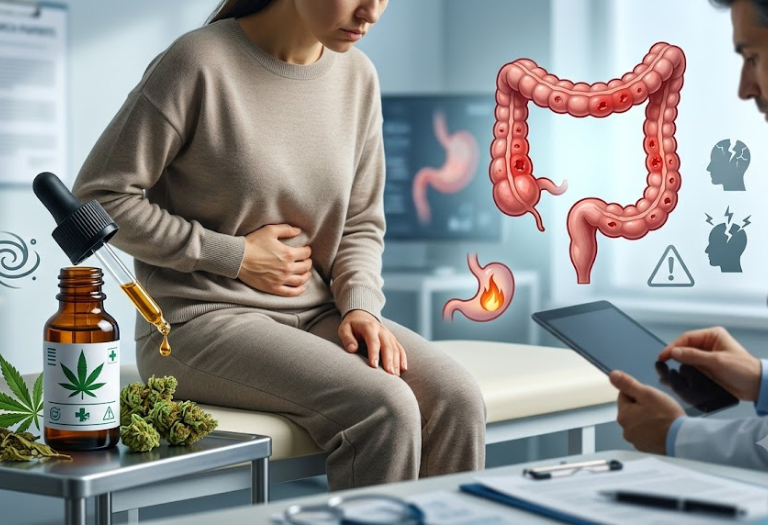
Safer Use Principles
If a licensed provider determines that medical cannabis is appropriate:
- Start with a low dose and increase cautiously.
- Use measured products rather than guessing dosage.
- Discuss THC versus CBD based on the symptoms being targeted.
- Review current medications for possible interactions.
- Track symptoms such as pain, bowel frequency, appetite, sleep, and side effects.
- Continue prescribed UC treatment unless your treating clinician specifically changes it.
Cannabis should support a treatment plan—not quietly replace it.

FAQs
No. UC is a chronic inflammatory disease, and cannabis has not been shown to cure it.
Current evidence does not establish that cannabis reliably reduces intestinal inflammation. (Crohn’s & Colitis Foundation)
It may relieve symptoms such as pain, nausea, or appetite loss for some people, but it should not replace treatment directed at the flare.
There is not enough evidence to say that one is universally better. CBD is non-intoxicating, while THC may have stronger effects on appetite and pain but also carries greater impairment risks.
Some patients report pain relief, and small studies support possible symptom improvement.
THC may stimulate appetite, which can be useful for some people experiencing reduced food intake.
There is currently insufficient evidence to recommend cannabis as a remission-maintenance treatment. (NIDDK)
No. Prescribed therapies that control inflammation should not be discontinued because cannabis improves symptoms.
No cannabis-based treatment is FDA-approved specifically to treat ulcerative colitis. (Crohn’s & Colitis Foundation)
Yes. A qualified provider can review your symptoms, medical history, medications, and goals to determine whether cannabis may be appropriate as supportive care.
When to Seek Medical Attention

Do not use cannabis to delay evaluation of a potentially serious UC complication.
Seek urgent medical attention for:
- Heavy or persistent rectal bleeding
- Severe abdominal pain
- High fever
- Persistent vomiting
- Severe dehydration
- Rapid worsening of symptoms
- Significant weakness or dizziness
Severe UC can require hospital treatment, IV fluids, medications, or even emergency surgery in life-threatening situations. (NIDDK)
Finding the Right Path to Digestive Relief
Ulcerative colitis can make everyday life revolve around symptoms. Medical cannabis may offer some people supportive relief for pain, nausea, appetite loss, sleep disruption, or stress—but controlling the disease itself still requires appropriate medical care.
The right question isn’t simply, “Can cannabis help?”
It’s “Can it safely fit into the treatment I’m already receiving?”
At MSNM, that next step can start with a consultation. Licensed medical marijuana providers can review your health history, current symptoms, medications, and goals to help determine whether medical cannabis is an appropriate option under your state’s requirements.
Keep your UC treatment working on the disease. Let the right cannabis guidance work on the symptoms that still get in the way. And give yourself room to get back to living—not just managing.
