
When Skin Symptoms Become More Than Skin Deep
Psoriasis is often thought of as a skin condition—but for many people, it’s much more than that.
Persistent itching. Dry, cracked skin. Painful plaques. Flare-ups that seem to appear without warning. For some, even wearing certain clothes or sleeping comfortably becomes difficult. Others find themselves constantly covering affected areas, avoiding social situations, or worrying about when the next flare will happen.
Beyond the visible symptoms, psoriasis can affect confidence, emotional well-being, sleep, and overall quality of life. In moderate to severe cases, the inflammation associated with psoriasis may also increase the risk of other health conditions, including psoriatic arthritis.
While medical treatment remains the cornerstone of psoriasis management, many individuals look for additional ways to relieve persistent discomfort and improve everyday comfort.
Medical cannabis is one option that continues gaining attention for symptom support in chronic inflammatory skin conditions.
To understand whether it may help, it’s important to first understand what psoriasis is—and how cannabinoids may interact with inflammation, itching, pain, and the body’s immune response.
Persistent itching. Dry, cracked skin. Painful plaques. Flare-ups that seem to appear without warning. For some, even wearing certain clothes or sleeping comfortably becomes difficult. Others find themselves constantly covering affected areas, avoiding social situations, or worrying about when the next flare will happen.
Beyond the visible symptoms, psoriasis can affect confidence, emotional well-being, sleep, and overall quality of life. In moderate to severe cases, the inflammation associated with psoriasis may also increase the risk of other health conditions, including psoriatic arthritis.
While medical treatment remains the cornerstone of psoriasis management, many individuals look for additional ways to relieve persistent discomfort and improve everyday comfort.
Medical cannabis is one option that continues gaining attention for symptom support in chronic inflammatory skin conditions.
To understand whether it may help, it’s important to first understand what psoriasis is—and how cannabinoids may interact with inflammation, itching, pain, and the body’s immune response.
Understanding Psoriasis
Psoriasis is a chronic autoimmune condition that causes skin cells to multiply much faster than normal.
Instead of replacing old skin cells gradually, the body produces new cells too quickly, leading to thick, inflamed patches known as plaques.
Instead of replacing old skin cells gradually, the body produces new cells too quickly, leading to thick, inflamed patches known as plaques.
- Common symptoms include:
- Red, inflamed patches of skin
- Thick silvery scales
- Persistent itching
- Burning or stinging sensations
- Dry, cracked skin that may bleed
- Nail changes
- Joint pain in some individuals (psoriatic arthritis)
- Psoriasis can affect nearly any part of the body, including:
- Scalp
- Elbows
- Knees
- Hands
- Feet
- Lower back
- Nails
- Symptoms often alternate between periods of improvement and flare-ups.
Why Psoriasis Can Be Difficult to Manage
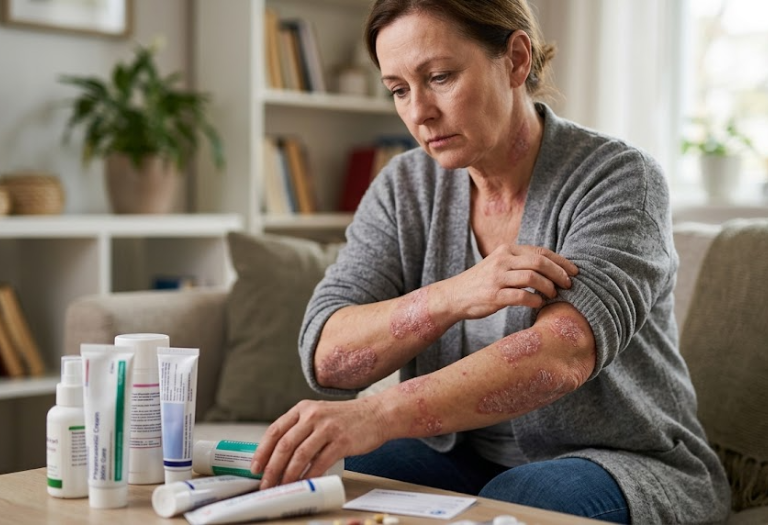
Psoriasis isn’t simply a skin problem.
It involves an overactive immune response that triggers ongoing inflammation throughout the body.
Several factors may trigger or worsen flare-ups, including:
It involves an overactive immune response that triggers ongoing inflammation throughout the body.
Several factors may trigger or worsen flare-ups, including:
- Stress
- Skin injuries
- Certain medications
- Infections
- Smoking
- Alcohol use
- Weather changes
Standard Medical Approaches for Psoriasis

Medical cannabis is not considered a cure or primary treatment for psoriasis.
Treatment focuses on controlling inflammation, slowing excessive skin cell growth, and relieving symptoms.
Treatment focuses on controlling inflammation, slowing excessive skin cell growth, and relieving symptoms.
1. Topical Treatments
Corticosteroids, vitamin D analogs, moisturizers, and other medicated creams are commonly used for mild to moderate psoriasis.
2. Phototherapy
Controlled ultraviolet (UV) light therapy may help slow abnormal skin cell growth.
3. Systemic Medications
Moderate to severe psoriasis may require oral medications or biologic therapies that target specific parts of the immune system.
4. Lifestyle Management
Stress reduction, skincare routines, smoking cessation, and maintaining a healthy weight may help reduce flare frequency.
Cannabis, if considered, should be viewed as adjunct symptom support, not a replacement for dermatologist-directed treatment.
How Cannabis Interacts With the Body
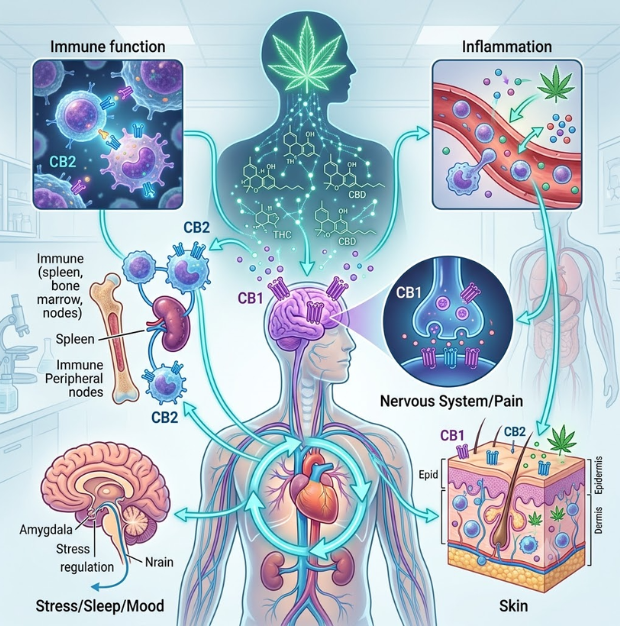
Cannabis interacts with the body’s endocannabinoid system (ECS)—a regulatory network involved in:
- Immune function
- Inflammation
- Pain perception
- Skin health
- Stress response
- Sleep regulation
Cannabinoid receptors are found in the skin, immune cells, and nervous system.
Researchers continue investigating whether cannabinoids may influence inflammatory skin conditions such as psoriasis.
Researchers continue investigating whether cannabinoids may influence inflammatory skin conditions such as psoriasis.
THC (Tetrahydrocannabinol)
- Psychoactive compound
- May help reduce pain perception
- Can promote relaxation
- May improve sleep disrupted by itching
- Higher doses may increase anxiety or dizziness
CBD (Cannabidiol)
- Non-intoxicating
- Has potential anti-inflammatory properties
- May help support skin barrier function
- May support stress management
- Often preferred for daytime use
Responses vary significantly between individuals.
Potential Benefits of Medical Cannabis for Psoriasis
While cannabis does not cure psoriasis or stop the autoimmune process, some individuals explore it to help manage ongoing symptoms.
1. Itching Relief
Persistent itching can be one of the most frustrating symptoms of psoriasis. Some patients report that cannabinoids help reduce itch intensity and improve overall comfort.
2. Skin Discomfort Support
Inflamed plaques may become painful, tender, or cracked. Medical cannabis may help influence pain-signaling pathways, providing supportive relief for skin discomfort.
3. Inflammation Support
Researchers continue studying how cannabinoids interact with inflammatory pathways through the endocannabinoid system. Although more research is needed, early findings suggest cannabinoids may influence immune signaling involved in chronic inflammation.
4. Better Sleep Quality
Nighttime itching and discomfort often interfere with restorative sleep. Some individuals report better sleep quality with balanced cannabinoid formulations, allowing the body to recover more effectively.
5. Stress and Emotional Well-Being
Stress is a well-known trigger for psoriasis flare-ups. CBD may help support relaxation and emotional balance, which may indirectly contribute to better symptom management for some individuals.
Current evidence suggests cannabis may support symptom relief in some patients, but responses vary widely and should always be monitored under medical supervision.
What Research Says About Cannabis and Psoriasis
Research specifically examining cannabis for psoriasis remains in its early stages.
Scientists have identified cannabinoid receptors within skin cells and the immune system, leading researchers to investigate whether cannabinoids may influence inflammation, skin cell growth, and immune activity.
Laboratory studies suggest cannabinoids may affect:
Instead, researchers believe cannabinoids may have potential as supportive therapy for symptom management while larger clinical studies continue.
Scientists have identified cannabinoid receptors within skin cells and the immune system, leading researchers to investigate whether cannabinoids may influence inflammation, skin cell growth, and immune activity.
Laboratory studies suggest cannabinoids may affect:
- Inflammatory signaling
- Skin cell proliferation
- Pain perception
- Itch pathways
Instead, researchers believe cannabinoids may have potential as supportive therapy for symptom management while larger clinical studies continue.
Why More Research Is Still Needed
Psoriasis is a complex autoimmune disease influenced by genetics, immune function, and environmental triggers.
Researchers continue studying:
Researchers continue studying:
- Long-term safety
- Effects on inflammatory pathways
- Optimal THC:CBD ratios
- Topical versus systemic cannabinoid therapies
- Drug interactions
- Long-term quality-of-life outcomes

Risks and Considerations
Cannabis use in psoriasis should be approached carefully.
1. Limited Clinical Evidence :
Research remains promising but inconclusive for psoriasis symptom management.
2. Cognitive Effects : High-THC products may impair concentration, memory, or reaction time.
3. Dependency Risk Long-term frequent use may increase the risk of cannabis use disorder in some individuals. 4. Medication Interactions : Cannabinoids may interact with biologics, immunosuppressants, or other prescription medications.
5. Delaying Appropriate Care : Relying solely on cannabis without proper dermatologic treatment may allow disease progression or increase the risk of complications.
2. Cognitive Effects : High-THC products may impair concentration, memory, or reaction time.
3. Dependency Risk Long-term frequent use may increase the risk of cannabis use disorder in some individuals. 4. Medication Interactions : Cannabinoids may interact with biologics, immunosuppressants, or other prescription medications.
5. Delaying Appropriate Care : Relying solely on cannabis without proper dermatologic treatment may allow disease progression or increase the risk of complications.
Safer Cannabis Use Strategies for Psoriasis Patients
If medical cannabis is included as part of a symptom-management plan:
1. Start Low and Go Slow : Gradually increasing dosage may help minimize unwanted side effects.
2. Consider CBD-Dominant or Balanced Products : These formulations may provide symptom support while minimizing intoxication.
3. Discuss Topical and Oral Options : Depending on symptoms, your healthcare provider may recommend different delivery methods.
4. Monitor Symptoms Carefully : Track:
1. Start Low and Go Slow : Gradually increasing dosage may help minimize unwanted side effects.
2. Consider CBD-Dominant or Balanced Products : These formulations may provide symptom support while minimizing intoxication.
3. Discuss Topical and Oral Options : Depending on symptoms, your healthcare provider may recommend different delivery methods.
4. Monitor Symptoms Carefully : Track:
- Itching severity
- Pain levels
- Sleep quality
- Flare frequency
- Side effects
Cannabis and Psoriasis Medications
Cannabinoids may interact with medications used for:
Always discuss cannabis use with your healthcare provider before combining treatments.
- Biologic therapies
- Immunosuppressants
- Corticosteroids
- Pain management
- Sleep disorders
Always discuss cannabis use with your healthcare provider before combining treatments.
FAQs
Can medical cannabis cure psoriasis?
No. Medical cannabis may help manage symptoms but does not cure psoriasis or stop the autoimmune process.
Can cannabis reduce psoriasis inflammation?
Research is ongoing. Early studies suggest cannabinoids may influence inflammatory pathways, but stronger clinical evidence is still needed.
Can cannabis help itching caused by psoriasis?
Some individuals report improvements in itching and skin discomfort, though responses vary.
Is CBD or THC better for psoriasis?
CBD may be preferred for daytime symptom support, while THC may help more with pain, itching, or sleep.
Can cannabis replace psoriasis medications?
No. Cannabis should not replace dermatologist-recommended treatments.
Can stress trigger psoriasis flare-ups?
Yes. Stress is a common trigger, and managing stress may help reduce flare frequency.
Are topical cannabis products effective?
Research remains limited, though this is an active area of investigation.
Can cannabis interact with biologic medications?
Potential interactions are possible and should be discussed with your healthcare provider.
Is smoking cannabis recommended?
Non-smoking methods are generally preferred for more controlled dosing.
Should I consult a healthcare provider before trying cannabis?
Yes. Professional medical guidance is strongly recommended.
When to Seek Immediate Medical Attention

Seek prompt medical care if you experience:
- Rapidly worsening skin lesions
- Signs of skin infection
- Severe joint pain or swelling
- High fever
- Widespread painful flare-ups
- New or worsening symptoms
Prompt medical care can help prevent complications and improve long-term disease management.
Finding the Right Path Skin and Symptom Relief
Psoriasis can affect far more than your skin—it can influence how you sleep, move, work, and feel every day.
For some individuals, medical cannabis may offer supportive relief for itching, pain, sleep disruption, and stress when used alongside a comprehensive psoriasis treatment plan.
At MSNM, patients connect with licensed medical marijuana providers who help determine whether cannabis may be an appropriate addition to their symptom management strategy.
Because managing psoriasis isn’t just about calming flare-ups—it’s about improving daily comfort, restoring confidence, and helping you live more comfortably over time.
For some individuals, medical cannabis may offer supportive relief for itching, pain, sleep disruption, and stress when used alongside a comprehensive psoriasis treatment plan.
At MSNM, patients connect with licensed medical marijuana providers who help determine whether cannabis may be an appropriate addition to their symptom management strategy.
Because managing psoriasis isn’t just about calming flare-ups—it’s about improving daily comfort, restoring confidence, and helping you live more comfortably over time.
Ready to find the
perfect strain for your needs?
Navigating the complexities of medical marijuana laws can be tricky, but with the right information, you can protect your privacy and your rights as a medical cannabis cardholder. At Marijuana Specialist Near Me, we make the process of obtaining a medical marijuana card straightforward, with online consultations and guidance through the legal landscape, ensuring you’re well informed about how your card can be used without compromising your privacy.
