

When Living With a Genetic Condition Means Managing Symptoms Every Day
Some health conditions have a beginning and an end. Others become part of everyday life.
For individuals living with Neurofibromatosis (NF), symptoms can vary widely—from mild skin changes to chronic pain, nerve-related discomfort, mobility challenges, and the emotional impact of living with a lifelong genetic disorder.
Some people experience occasional discomfort. Others live with persistent pain caused by nerve tumors, surgeries, or complications that affect daily activities, sleep, work, and overall quality of life.
While advances in treatment continue to improve care, many individuals still look for additional ways to manage chronic symptoms more comfortably.
Medical cannabis is one option that continues gaining attention as supportive care for people living with Neurofibromatosis.
To understand whether it may help, it’s important to first understand how Neurofibromatosis affects the nervous system—and how cannabinoids may interact with pain, sleep, stress, and nerve-related symptoms.
For individuals living with Neurofibromatosis (NF), symptoms can vary widely—from mild skin changes to chronic pain, nerve-related discomfort, mobility challenges, and the emotional impact of living with a lifelong genetic disorder.
Some people experience occasional discomfort. Others live with persistent pain caused by nerve tumors, surgeries, or complications that affect daily activities, sleep, work, and overall quality of life.
While advances in treatment continue to improve care, many individuals still look for additional ways to manage chronic symptoms more comfortably.
Medical cannabis is one option that continues gaining attention as supportive care for people living with Neurofibromatosis.
To understand whether it may help, it’s important to first understand how Neurofibromatosis affects the nervous system—and how cannabinoids may interact with pain, sleep, stress, and nerve-related symptoms.
Understanding Neurofibromatosis
Neurofibromatosis is a group of inherited genetic disorders that cause tumors to develop along nerves throughout the body.
These tumors are usually benign (non-cancerous), but they can still cause significant health problems depending on their size and location.
The three main types include:
These tumors are usually benign (non-cancerous), but they can still cause significant health problems depending on their size and location.
The three main types include:
- Neurofibromatosis Type 1 (NF1)
- The most common form, often characterized by:
- Café-au-lait spots
- Skin neurofibromas
- Learning difficulties
- Bone abnormalities
- Neurofibromatosis Type 2 (NF2)
- Often associated with tumors affecting the hearing and balance nerves, which may lead to:
- Hearing loss
- Ringing in the ears (tinnitus)
- Balance problems
- Facial weakness
- Schwannomatosis
- A rarer form primarily associated with multiple painful schwannomas affecting peripheral nerves.
- Symptoms vary significantly between individuals but may include:
- Chronic pain
- Nerve pain
- Tingling or numbness
- Muscle weakness
- Fatigue
- Sleep disturbances
- Anxiety or depression related to chronic illness
Why Neurofibromatosis Can Be Challenging to Manage
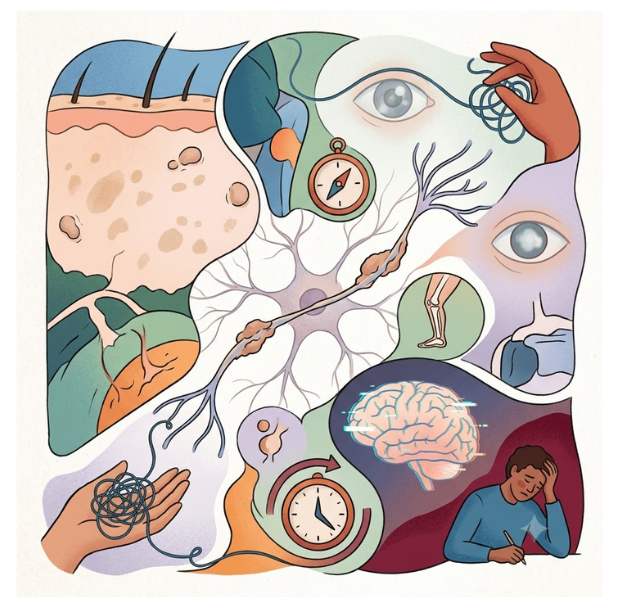
Neurofibromatosis affects much more than the nervous system.
Depending on tumor location and disease severity, patients may experience:
- Chronic nerve compression
- Persistent pain
- Repeated surgeries
- Mobility limitations
- Emotional stress
- Sleep disruption
- Reduced quality of life
Standard Medical Approaches for Neurofibromatosis
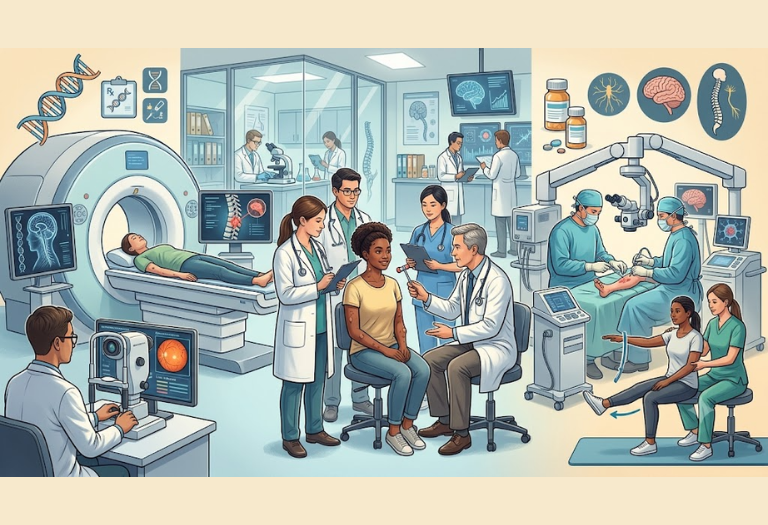
Medical cannabis is not considered a cure or primary treatment for Neurofibromatosis.
Treatment depends on the type of Neurofibromatosis and the symptoms involved.
Treatment depends on the type of Neurofibromatosis and the symptoms involved.
1. Regular Medical Monitoring
Routine imaging and specialist evaluations help monitor tumor growth and detect complications early.
2. Surgery
Some tumors may require surgical removal if they cause pain, neurological symptoms, or threaten nearby structures.
3. Targeted Drug Therapy
Certain patients with specific forms of NF may qualify for targeted therapies that help slow tumor growth.
4. Pain Management
Pain medications, rehabilitation, and supportive therapies may be recommended for chronic discomfort.
5. Physical and Occupational Therapy
Therapy may help improve mobility, strength, and independence.
Cannabis, if considered, should be viewed as adjunct symptom support, not a replacement for evidence-based medical care.
How Cannabis Interacts With the Nervous System
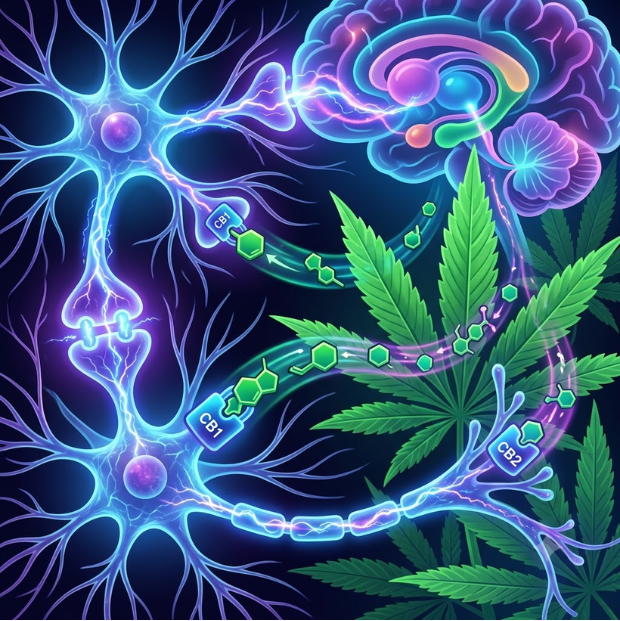
Cannabis interacts with the body’s endocannabinoid system (ECS)—a regulatory network involved in:
- Pain perception
- Inflammation
- Sleep regulation
- Mood balance
- Stress response
- Nervous system communication
Because cannabinoid receptors are found throughout the brain and peripheral nervous system, researchers continue exploring whether cannabinoids may help manage symptoms associated with chronic neurological conditions.
THC (Tetrahydrocannabinol)
- Psychoactive compound
- May reduce pain perception
- Can promote relaxation
- May improve sleep
- Higher doses may increase dizziness or anxiety
CBD (Cannabidiol)
- Non-intoxicating
- May support relaxation
- Has potential anti-inflammatory properties
- Often preferred for daytime symptom support
Responses vary considerably between individuals.
Potential Benefits of Medical Cannabis for Neurofibromatosis
While cannabis does not shrink tumors or treat the underlying genetic condition, some individuals explore it to help manage chronic symptoms.
1. Chronic Pain Relief
Persistent pain is one of the most common challenges in Neurofibromatosis. Cannabinoids may influence pain pathways and help some individuals experience greater comfort.
2. Nerve Pain Support
Tumors pressing on nerves may cause burning, tingling, or shooting pain. Some patients report improvements in neuropathic discomfort with medical cannabis.
3. Sleep Quality Improvement
Pain often interferes with restorative sleep. Better sleep may support recovery, mood, and overall well-being.
4. Stress and Emotional Support
Living with a lifelong condition can create ongoing emotional strain. CBD may help support relaxation and emotional balance for some individuals.
5. Improved Daily Comfort
For some patients, symptom relief may make it easier to participate in rehabilitation, work, social activities, and everyday routines.
Responses vary significantly and should always be monitored under medical supervision.
What Research Says About Cannabis and Neurofibromatosis
Research specifically evaluating cannabis for Neurofibromatosis remains limited.
Most available evidence comes from studies involving:
Some patients living with Neurofibromatosis report improvements in pain, sleep, and overall comfort.
However, current evidence does not suggest cannabis shrinks neurofibromas, slows disease progression, or treats the underlying genetic disorder.
Instead, cannabis is generally viewed as a potential supportive therapy for symptom management.
Most available evidence comes from studies involving:
- Neuropathic pain
- Chronic pain disorders
- Cancer-related pain
- Multiple sclerosis
- Other neurological conditions
Some patients living with Neurofibromatosis report improvements in pain, sleep, and overall comfort.
However, current evidence does not suggest cannabis shrinks neurofibromas, slows disease progression, or treats the underlying genetic disorder.
Instead, cannabis is generally viewed as a potential supportive therapy for symptom management.
Why More Research Is Still Needed
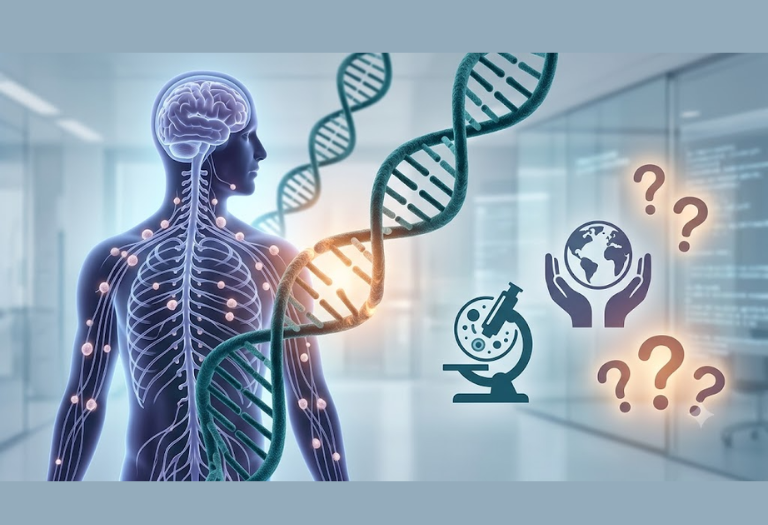
Neurofibromatosis is a rare condition with several distinct subtypes, making large clinical studies difficult.
Researchers continue investigating:
Researchers continue investigating:
- Long-term safety
- Effects on chronic nerve pain
- Optimal THC:CBD ratios
- Drug interactions
- Quality-of-life outcomes
- Which patients may benefit most

Risks and Considerations
Cannabis use in Neurofibromatosis should be approached carefully.
1. Cognitive Effects : High-THC products may impair concentration, memory, or reaction time.
2. Dependency Risk : Regular long-term use may increase the risk of cannabis use disorder.
3. Dizziness or Balance Problems: Individuals with NF2 may already experience balance difficulties that could worsen with certain cannabis products.
4. Medication Interactions : Cannabinoids may interact with pain medications, targeted therapies, or other prescription medications.
5. Symptom Variability : Not every patient experiences symptom improvement, and responses differ considerably.
1. Cognitive Effects : High-THC products may impair concentration, memory, or reaction time.
2. Dependency Risk : Regular long-term use may increase the risk of cannabis use disorder.
3. Dizziness or Balance Problems: Individuals with NF2 may already experience balance difficulties that could worsen with certain cannabis products.
4. Medication Interactions : Cannabinoids may interact with pain medications, targeted therapies, or other prescription medications.
5. Symptom Variability : Not every patient experiences symptom improvement, and responses differ considerably.
Safer Cannabis Use Strategies for Neurofibromatosis Patients
If medical cannabis is included in a symptom-management plan:
1. Start Low and Go Slow : Gradually increasing dosage may help reduce unwanted side effects.
2. Consider CBD-Dominant or Balanced Products : These formulations may provide symptom support while minimizing psychoactive effects.
3. Choose Controlled Delivery Methods : Tinctures, capsules, and measured products often provide more predictable dosing.
4. Monitor Symptoms Carefully :
Track:
1. Start Low and Go Slow : Gradually increasing dosage may help reduce unwanted side effects.
2. Consider CBD-Dominant or Balanced Products : These formulations may provide symptom support while minimizing psychoactive effects.
3. Choose Controlled Delivery Methods : Tinctures, capsules, and measured products often provide more predictable dosing.
4. Monitor Symptoms Carefully :
Track:
- Pain levels
- Sleep quality
- Daily function
- Mobility
- Side effects
Cannabis and Neurofibromatosis Medications
Cannabinoids may interact with medications used for:
- Chronic pain
- Anxiety
- Sleep disorders
- Targeted therapies
- Muscle relaxation
FAQs
Can medical cannabis cure Neurofibromatosis?
No. Medical cannabis may help manage symptoms but does not cure Neurofibromatosis or treat the underlying genetic condition.
Can cannabis shrink neurofibromas?
Current research does not show that cannabis shrinks neurofibromas or slows tumor growth.
Can cannabis help nerve pain in Neurofibromatosis?
Some individuals report reduced nerve pain, though responses vary.
Is CBD or THC better for Neurofibromatosis?
CBD may support daytime symptom management, while THC may help more with pain and sleep.
Can cannabis improve sleep?
Some patients report better sleep due to reduced pain and discomfort.
Can cannabis replace surgery or other treatments?
No. Cannabis should not replace medically recommended treatments.
Is smoking cannabis recommended?
Non-smoking methods are generally preferred for more consistent dosing.
Can cannabis interact with medications?
Yes. Drug interactions are possible and should be discussed with a healthcare provider.
Is medical cannabis approved specifically for Neurofibromatosis?
No. Cannabis is not FDA-approved specifically for Neurofibromatosis.
Should I consult a healthcare provider first?
Yes. Professional medical guidance is strongly recommended.
When to Seek Immediate Medical Attention

Seek prompt medical care if you experience:
- Sudden weakness
- Rapid tumor growth
- Severe headaches
- Vision changes
- New hearing loss
- Difficulty walking
- Severe unexplained pain
These symptoms may indicate complications requiring immediate medical care.
Finding the Right Path to Long-Term Symptom Relief
Living with Neurofibromatosis means managing more than a diagnosis—it means finding ways to improve comfort, mobility, and quality of life every day.
For some individuals, medical cannabis may offer supportive relief for chronic pain, nerve discomfort, sleep challenges, and emotional well-being when used alongside comprehensive medical care. <
At MSNM, patients connect with licensed medical marijuana providers who help create personalized treatment plans based on their symptoms, medical history, and treatment goals.
Because living better isn’t about replacing proven therapies—it’s about adding the right support to help make each day a little more comfortable, more manageable, and more hopeful.
For some individuals, medical cannabis may offer supportive relief for chronic pain, nerve discomfort, sleep challenges, and emotional well-being when used alongside comprehensive medical care. <
At MSNM, patients connect with licensed medical marijuana providers who help create personalized treatment plans based on their symptoms, medical history, and treatment goals.
Because living better isn’t about replacing proven therapies—it’s about adding the right support to help make each day a little more comfortable, more manageable, and more hopeful.
Ready to find the
perfect strain for your needs?
Navigating the complexities of medical marijuana laws can be tricky, but with the right information, you can protect your privacy and your rights as a medical cannabis cardholder. At Marijuana Specialist Near Me, we make the process of obtaining a medical marijuana card straightforward, with online consultations and guidance through the legal landscape, ensuring you’re well informed about how your card can be used without compromising your privacy.
