
Living With a Condition That Changes Over Time
Huntington’s disease can affect much more than movement.
For someone living with the condition, involuntary movements may be accompanied by changes in mood, thinking, behavior, speech, sleep, and swallowing. Over time, these symptoms can interfere with work, relationships, independence, and everyday activities.
Huntington’s disease is an inherited neurological disorder caused by a genetic change that gradually damages nerve cells in the brain. The condition typically develops during adulthood, although juvenile Huntington’s disease can occur. Symptoms generally become more severe over time.
There is currently no cure for Huntington’s disease or treatment proven to stop or reverse its progression. However, medications, therapy, nutritional support, and other forms of care can help manage individual symptoms and improve quality of life.
As patients and families explore ways to manage symptoms, some may ask:
Can medical cannabis help with Huntington’s disease?
Cannabis has been investigated for neurological symptoms and conditions, but evidence specifically involving Huntington’s disease remains limited. Preclinical research has suggested possible effects on neurological pathways, but these findings have not established cannabis as an effective treatment for Huntington’s disease in humans.
For that reason, medical cannabis should be considered, if at all, as a potential supportive option for selected symptoms, not as a treatment that slows or cures Huntington’s disease.
What Is Huntington’s Disease?
Huntington’s disease is an inherited disorder in which nerve cells in certain areas of the brain gradually become damaged and die.
The disease is caused by a mutation in the HTT gene, which affects production of a protein called huntingtin.
Because Huntington’s disease is inherited, a person with the disease-causing genetic change can pass it to their children.
The disease is caused by a mutation in the HTT gene, which affects production of a protein called huntingtin.
Because Huntington’s disease is inherited, a person with the disease-causing genetic change can pass it to their children.
- The condition affects several areas of brain function, including:
- Voluntary movement
- Coordination
- Thinking
- Memory
- Mood
- Behavior
- Speech
- Swallowing
- The combination and severity of symptoms can vary from person to person.
What Are the Symptoms of Huntington’s Disease?
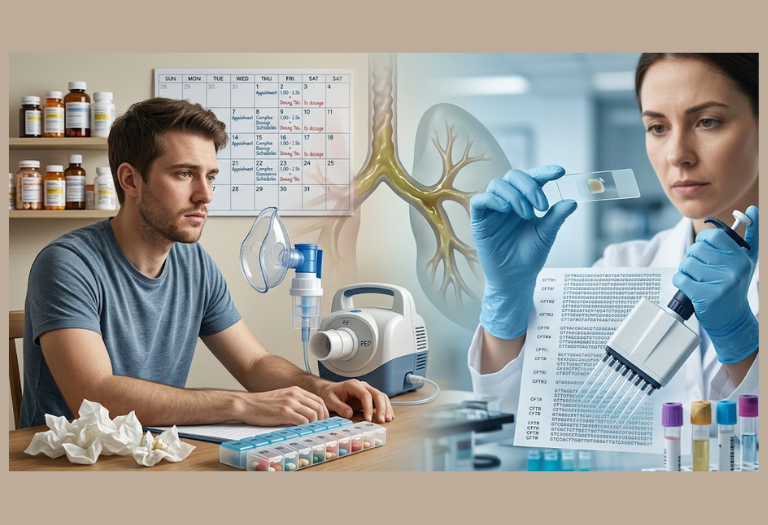
Huntington’s disease can cause movement, cognitive, and behavioral symptoms.
Movement Symptoms
Movement-related symptoms may include:
- Chorea, or involuntary dance-like movements
- Muscle rigidity
- Dystonia
- Tremors
- Problems with balance
- Difficulty walking
- Abnormal eye movements
- Slurred speech
- Problems with coordination
Cognitive Symptoms
As Huntington’s disease progresses, a person may experience:
- Difficulty concentrating
- Problems organizing tasks
- Trouble making decisions
- Memory difficulties
- Slower thinking
- Difficulty learning new information
- Problems with judgment
- Progressive cognitive impairment
Behavioral and Emotional Symptoms
Huntington’s disease can also affect emotional and behavioral health.
Possible symptoms include:
- Irritability
- Depression
- Anxiety
- Mood changes
- Loss of motivation
- Anger or emotional outbursts
- Social withdrawal
- Impulsive behavior
How Is Huntington’s Disease Diagnosed?

Diagnosis usually involves several components.
A healthcare professional may evaluate:
Because genetic testing can have significant emotional and family implications, genetic counseling may be recommended before and after testing.
A healthcare professional may evaluate:
- Medical history
- Family history
- Neurological symptoms
- Movement patterns
- Cognitive function
- Psychiatric or behavioral symptoms
Because genetic testing can have significant emotional and family implications, genetic counseling may be recommended before and after testing.
How Is Huntington’s Disease Treated?
There is currently no cure for Huntington’s disease.
Treatment focuses on managing symptoms and maintaining function for as long as possible.
Treatment focuses on managing symptoms and maintaining function for as long as possible.
Medications for Chorea
Certain medications can help reduce involuntary movements.
These include:
- Tetrabenazine
- Deutetrabenazine
- Valbenazine
Treatment for Mood and Behavioral Symptoms
Antidepressants, anti-anxiety medications, antipsychotic medications, or other psychiatric treatments may be used depending on the person’s symptoms.
Treatment needs to be individualized because some medications can cause sedation or other side effects.
Physical and Occupational Therapy
Physical therapy and occupational therapy may help patients maintain mobility, coordination, safety, and independence.
Movement training and adaptive strategies can be particularly important as symptoms progress.
Speech and Swallowing Therapy
Speech-language therapy may help with communication and swallowing difficulties.
Swallowing problems can become particularly important because they may increase the risk of choking, aspiration, dehydration, and nutritional deficiencies.
Nutritional Support
People with Huntington’s disease may lose weight or have difficulty eating as the disease progresses.
Nutritional support may therefore become an important component of long-term care.

Where Does Medical Cannabis Fit Into Huntington’s Disease Care?
Medical cannabis is sometimes discussed in relation to neurological symptoms because cannabinoids interact with receptors involved in the nervous system.
However, this does not mean cannabis has been proven to treat Huntington’s disease.
Research involving cannabinoids and Huntington’s disease has included laboratory and animal studies, as well as limited clinical investigation. Although researchers have explored possible effects on movement and other neurological symptoms, the clinical evidence remains insufficient to establish cannabis as a standard treatment for Huntington’s disease.
Therefore, the most responsible way to discuss medical cannabis in Huntington’s disease is as a potential adjunctive or supportive option, rather than a disease-modifying treatment.
Can Medical Cannabis Help With Huntington’s Chorea?
Chorea is one of the most recognizable symptoms of Huntington’s disease.
Because cannabinoids affect neurological signaling, researchers have investigated whether cannabis-based medicines could influence involuntary movements.
However, evidence specifically supporting cannabis for Huntington’s chorea remains insufficient.
There are established medications for Huntington’s chorea, including tetrabenazine, deutetrabenazine, and valbenazine.
Patients should therefore not replace prescribed chorea treatment with cannabis without medical supervision.
If cannabis is being considered, the neurologist should be involved in the decision.
What About Huntington’s Disease-Related Pain?
Pain can occur in people with Huntington’s disease.
Muscle stiffness, abnormal postures, falls, joint problems, muscle contractions, and other complications may contribute to discomfort.
Cannabinoids have been studied for chronic pain more broadly, but evidence varies considerably depending on the underlying condition. Current research suggests that any pain benefits tend to be modest and condition-specific rather than universal.
There is not enough evidence to conclude that cannabis specifically treats pain caused by Huntington’s disease.
Pain should therefore be evaluated to determine its underlying cause before considering cannabis as part of symptom management.
Can Cannabis Help With Sleep Problems?
Sleep difficulties can occur in Huntington’s disease.
Some people report that cannabis makes them feel relaxed or sleepy.
However, sedation is also a potential adverse effect of cannabinoids, and adding cannabis to other sedating medications may increase impairment.
Sleep problems should be discussed with a healthcare professional because they may be associated with:
- Pain
- Anxiety
- Depression
- Medication effects
- Movement symptoms
- Changes in the sleep-wake cycle
Medical Cannabis and Anxiety
Anxiety and emotional distress can occur as part of Huntington’s disease.
Some patients may consider cannabis because they hope it will reduce anxiety.
The evidence for cannabinoids and anxiety remains mixed and generally low-certainty. A recent systematic review found some signals of anxiety improvement but concluded that the evidence was insufficient to support cannabinoids as first-line treatment, with THC also associated with increased adverse-event withdrawals.
THC can also cause anxiety or paranoia in some individuals.
For someone with Huntington’s disease, this deserves particular attention because psychiatric and behavioral symptoms can already be an important part of the condition.

Could Cannabis Help With Appetite?
Maintaining adequate nutrition can become challenging as Huntington’s disease progresses.
Some people may experience weight loss because of increased energy expenditure, swallowing difficulties, reduced ability to eat independently, or other disease-related factors.
THC may increase appetite in some people.
However, increasing appetite does not address swallowing dysfunction or the increased nutritional needs that can occur in Huntington’s disease.
Nutritional problems should therefore be evaluated by the patient’s healthcare team and, when appropriate, a dietitian.
Can Medical Cannabis Slow Huntington’s Disease?
There is currently no evidence establishing medical cannabis as a treatment that slows or stops Huntington’s disease progression.
Cannabis should not be presented as a therapy that:
Research into the biological effects of cannabinoids continues, but laboratory findings should not be interpreted as proof that cannabis treats Huntington’s disease in people.
Cannabis should not be presented as a therapy that:
- Stops nerve-cell damage
- Corrects the HTT gene mutation
- Prevents disease progression
- Reverses Huntington’s disease
- Cures Huntington’s disease
- Replaces neurological treatment
Research into the biological effects of cannabinoids continues, but laboratory findings should not be interpreted as proof that cannabis treats Huntington’s disease in people.
What About CBD for Huntington’s Disease?
CBD, or cannabidiol, is one of the major cannabinoids found in cannabis.
Because CBD generally does not produce the same intoxicating effects as THC, some people assume it is automatically safer or more effective.
That assumption is not supported by sufficient evidence for Huntington’s disease.
There is currently no established CBD treatment that has been proven to slow Huntington’s disease or reliably control its symptoms.
CBD can also interact with medications and, at higher doses, may affect the liver.
Patients should therefore discuss CBD with their healthcare provider just as they would any other cannabis-based product.
Drug Interactions Are Especially Important
People with Huntington’s disease may take several medications at the same time.
These can include:
- Chorea medications
- Antipsychotic medications
- Antidepressants
- Anti-anxiety medications
- Sleep medications
- Muscle relaxants
- Pain medications
- Other prescription medications
Could Cannabis Increase Fall Risk?
Potentially.
Huntington’s disease can already cause balance and coordination problems.
Cannabis may cause:
- Dizziness
- Drowsiness
- Slower reaction time
- Impaired coordination
- Changes in attention
- Altered perception
What About Smoking Cannabis?
The method of administration matters.
Smoking cannabis exposes the lungs to smoke and combustion products.
For someone with swallowing problems, neurological impairment, or other health conditions, a healthcare professional may recommend considering whether a non-inhaled formulation is more appropriate.
Medical cannabis does not necessarily mean smoking marijuana.
Depending on state law and the patient’s circumstances, different formulations may be available.
A qualified physician can explain the potential advantages and disadvantages of available options.
Medical Cannabis and Advanced Huntington’s Disease
As Huntington’s disease progresses, people may experience more difficulty with:
- Walking
- Eating
- Swallowing
- Speaking
- Managing medications
- Performing daily activities
- Maintaining independence
Questions to Ask Before Using Medical Cannabis
If you or a loved one has Huntington’s disease and is considering medical cannabis, ask the healthcare team:
- What symptom are we trying to manage?
- Could cannabis interact with current Huntington’s medications?
- Could it worsen balance or fall risk?
- Could it increase drowsiness or confusion?
- Could THC affect mood, anxiety, or behavior?
- Would CBD or THC create different risks?
- Should inhaled cannabis be avoided?
- Could cannabis affect swallowing or eating?
- Should the neurologist coordinate with the medical marijuana physician?
- How should symptoms and side effects be monitored?
Is Huntington’s Disease a Qualifying Condition for Medical Marijuana?
Medical marijuana eligibility depends on the state where a patient lives.
Each state establishes its own rules regarding qualifying conditions, physician certification, documentation, and permitted products.
Patients should check their state’s current medical marijuana regulations and undergo an evaluation by an authorized physician.
A diagnosis of Huntington’s disease does not automatically guarantee approval in every state.

FAQs
Can medical cannabis cure Huntington’s disease?
No. There is currently no cure for Huntington’s disease, and cannabis has not been shown to stop or reverse the disease.
Can cannabis slow the progression of Huntington’s disease?
There is currently insufficient clinical evidence to show that cannabis slows or stops Huntington’s disease progression.
Can medical cannabis help with Huntington’s chorea?
Cannabinoids have been investigated for movement symptoms, but there is not enough evidence to establish cannabis as a standard treatment for Huntington’s chorea. Established medications such as tetrabenazine, deutetrabenazine, and valbenazine may be used to treat chorea.
Can cannabis help with Huntington’s disease pain?
Cannabis may be considered for pain in selected circumstances, but evidence specifically for Huntington’s-related pain is limited. Pain should be evaluated and treated according to its underlying cause.
Can CBD help Huntington’s disease?
There is not enough evidence to establish CBD as an effective treatment for Huntington’s disease. CBD can also interact with medications and may cause side effects.
Can cannabis help with anxiety in Huntington’s disease?
The evidence for cannabinoids and anxiety is mixed and generally low-certainty. THC may also worsen anxiety or cause paranoia in some people.
Can cannabis help with sleep?
Some people report feeling sleepy after cannabis use, but evidence is not strong enough to recommend cannabis as a standard treatment for sleep problems associated with Huntington’s disease.
Can cannabis replace Huntington’s medications?
No. Cannabis should not replace prescribed medications for chorea, mood symptoms, behavioral symptoms, or other Huntington’s-related complications without medical supervision.
Is smoking marijuana safe for someone with Huntington’s disease?
Smoking may not be appropriate for everyone. Cannabis can also cause dizziness, sedation, and impaired coordination, which may be particularly concerning for someone already experiencing balance or movement problems.
When should someone with Huntington’s disease seek urgent help?
New or severe confusion, loss of consciousness, serious falls or injuries, choking, breathing difficulty, suicidal thoughts, or other acute changes require prompt medical evaluation.
Can cannabis replace Huntington’s medications?
No. Cannabis should not replace prescribed medications for chorea, mood symptoms, behavioral symptoms, or other Huntington’s-related complications without medical supervision.
A Careful Approach to Medical Cannabis and Huntington’s Disease
Huntington’s disease is a complex inherited neurological condition that affects movement, cognition, behavior, and emotional health.
Medical cannabis may be something patients and families want to discuss as part of supportive care, particularly when dealing with symptoms such as pain or sleep difficulties. However, the evidence specifically supporting cannabis for Huntington’s disease remains limited.
Cannabis has not been established as a cure or disease-modifying treatment, and it should not replace medications, physical therapy, occupational therapy, speech therapy, nutritional support, psychiatric care, or neurological treatment.
If you are considering medical cannabis for Huntington’s disease, speak with your neurologist and a qualified medical marijuana physician. Together, they can consider your symptoms, medications, fall risk, mental health, and overall health before determining whether cannabis has an appropriate role in your care.
Medical Disclaimer
This article is for educational purposes only and is not a substitute for professional medical advice, diagnosis, or treatment. Huntington’s disease requires individualized care from qualified neurological and healthcare professionals. Do not stop, reduce, or replace prescribed medications because of information about medical cannabis. Cannabis may cause sedation, dizziness, impaired coordination, mood changes, and drug interactions. Seek urgent professional help for serious falls or injuries, choking, breathing problems, suicidal thoughts, or other acute symptoms. Medical marijuana eligibility and laws vary by state.
Ready to find the
perfect strain for your needs?
Navigating the complexities of medical marijuana laws can be tricky, but with the right information, you can protect your privacy and your rights as a medical cannabis cardholder. At Marijuana Specialist Near Me, we make the process of obtaining a medical marijuana card straightforward, with online consultations and guidance through the legal landscape, ensuring you’re well informed about how your card can be used without compromising your privacy.
