

When Breathing and Digestion Become Daily Challenges
Breathing is something most people rarely think about.
For someone living with cystic fibrosis (CF), it can become something they have to actively manage every day.
A persistent cough. Thick mucus that is difficult to clear. Repeated respiratory infections. Digestive problems. Fatigue. Changes in appetite or weight. Over time, cystic fibrosis can affect much more than the lungs.
Cystic fibrosis is a genetic disorder that affects several organs, particularly the lungs and digestive system. The condition causes mucus to become unusually thick and sticky, which can block airways, contribute to lung damage, and make infections more likely. It can also interfere with digestion and nutrient absorption.
Modern CF care has changed significantly, and treatments can help people live longer and healthier lives. Still, some people experience ongoing symptoms or treatment-related challenges and may look for additional ways to support comfort and quality of life.
One question that sometimes comes up is:
Can medical cannabis help people living with cystic fibrosis?
The answer is not straightforward. Cannabis has not been established as a treatment that corrects the underlying genetic defect responsible for CF. Research specifically examining cannabis in people with cystic fibrosis remains limited, and inhaled marijuana can be particularly concerning because CF already affects the lungs.
For that reason, anyone with CF considering cannabis should discuss it with their CF care team and a qualified medical professional before using it.
What Is Cystic Fibrosis?
Cystic fibrosis is an inherited genetic disorder caused by changes in the CFTR gene.
The CFTR protein helps regulate the movement of salt and fluids across cell surfaces. When CFTR does not function properly, secretions in several organs can become thicker and stickier than normal.
The lungs are one of the most affected areas.
Thick mucus can accumulate inside the airways, making it harder to clear mucus and creating an environment where bacteria and other germs can grow. This can contribute to repeated lung infections and progressive lung damage.
CF can also affect the digestive system.
The condition may interfere with the delivery of digestive enzymes to the intestines, making it more difficult for the body to absorb nutrients.
- According to the CDC, common signs and symptoms can include:
- Persistent coughing
- Thick mucus
- Wheezing or shortness of breath
- Frequent lung or sinus infections
- Nasal polyps
- Difficulty gaining weight
- Greasy or foul-smelling stools
- Constipation
- Male infertility
- Symptoms and severity can vary considerably between individuals.
Why Cystic Fibrosis Can Be Difficult to Manage

Cystic fibrosis is an inherited genetic disorder caused by changes in the CFTR gene.
The CFTR protein helps regulate the movement of salt and fluids across cell surfaces. When CFTR does not function properly, secretions in several organs can become thicker and stickier than normal.
The lungs are one of the most affected areas.
Thick mucus can accumulate inside the airways, making it harder to clear mucus and creating an environment where bacteria and other germs can grow. This can contribute to repeated lung infections and progressive lung damage.
CF can also affect the digestive system.
The condition may interfere with the delivery of digestive enzymes to the intestines, making it more difficult for the body to absorb nutrients.
The CFTR protein helps regulate the movement of salt and fluids across cell surfaces. When CFTR does not function properly, secretions in several organs can become thicker and stickier than normal.
The lungs are one of the most affected areas.
Thick mucus can accumulate inside the airways, making it harder to clear mucus and creating an environment where bacteria and other germs can grow. This can contribute to repeated lung infections and progressive lung damage.
CF can also affect the digestive system.
The condition may interfere with the delivery of digestive enzymes to the intestines, making it more difficult for the body to absorb nutrients.
Some people may also experience:
- Chronic respiratory symptoms
- Recurring infections
- Chest discomfort
- Fatigue
- Digestive problems
- Reduced appetite
- Difficulty maintaining weight
- Sleep disruption
- Anxiety or emotional stress
- Treatment-related fatigue
The complexity of CF care means that symptom management needs to happen alongside treatment of the underlying disease.
Medical cannabis should therefore never be viewed as a replacement for airway-clearance therapy, CFTR modulators, antibiotics, nutritional treatment, or other prescribed CF care.
Standard Treatment for Cystic Fibrosis
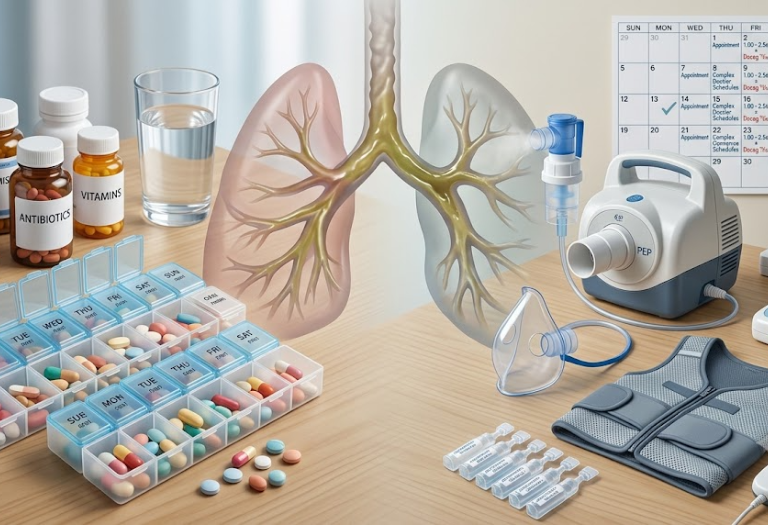
There is no single treatment plan that works for everyone with CF.
Care is usually individualized according to the person’s genetic mutation, symptoms, lung function, infections, digestive health, and other medical needs.
Care is usually individualized according to the person’s genetic mutation, symptoms, lung function, infections, digestive health, and other medical needs.
1. CFTR Modulator Therapy
CFTR modulators are medications designed to improve the function of the defective CFTR protein.
These medications only work for people with certain CFTR genetic changes, so genetic information can help determine whether a particular treatment is appropriate.
2. Airway Clearance
Airway-clearance techniques help loosen and remove thick mucus from the lungs.
These therapies can be an important part of maintaining respiratory health and reducing mucus accumulation.
3. Infection Treatment
People with CF may be more susceptible to respiratory infections.
Doctors may use antibiotics or other treatments when infections occur or when there is a need to manage particular respiratory bacteria.
4. Digestive and Nutritional Support
CF can interfere with digestion and nutrient absorption.
Some people require pancreatic enzyme replacement therapy, additional calories, vitamins, or other nutritional support.
5. Ongoing Specialist Care
Because CF can affect multiple organ systems, treatment often involves a multidisciplinary medical team.
The CDC notes that CF care may involve different specialists working together to address respiratory health, digestion, infections, and other complications.
Medical Cannabis and Cystic Fibrosis
Medical cannabis is sometimes explored for symptom management in chronic illnesses.
Cannabinoids such as THC and CBD interact with the body’s endocannabinoid system, which is involved in several physiological processes, including pain perception, appetite, sleep, and nervous-system signaling.
However, that does not mean cannabis treats the underlying cause of cystic fibrosis.
There is currently not enough clinical evidence to conclude that medical cannabis improves lung function, clears CF mucus, prevents respiratory infections, or changes the progression of cystic fibrosis.
Instead, if cannabis is considered at all, the discussion is more appropriately focused on individual symptoms and quality of life.
For example, some patients may be interested in whether cannabis could potentially help with issues such as:
- Chronic pain
- Appetite changes
- Nausea
- Sleep difficulties
- Stress associated with chronic illness

Why Inhaled Cannabis Can Be a Concern With Cystic Fibrosis
This is one of the most important considerations for anyone with CF.
Smoking marijuana is not considered a safe way to manage symptoms in someone with a chronic lung disease.
The Cystic Fibrosis Foundation specifically warns that smoking marijuana can damage the lungs and introduce bacteria and fungi into the airways. It also notes that cannabis may interact with CF medications, including CFTR modulators.
For someone whose lungs are already vulnerable to mucus accumulation and respiratory infections, deliberately exposing the airways to smoke may create additional risks.
This is why people with CF should not assume that medical cannabis automatically means smoking cannabis.
If a physician determines that cannabinoid therapy is appropriate, they may discuss non-inhaled options and consider the individual’s medications, symptoms, lung health, and other risk factors.
Could Medical Cannabis Help With Appetite or Weight-Related Concerns?
Maintaining adequate nutrition can be an important part of CF management.
Some people associate cannabis with increased appetite, but appetite stimulation alone does not address the nutritional problems caused by CF.
Digestive enzyme insufficiency, malabsorption, and increased nutritional requirements may require targeted medical and nutritional treatment.
Cannabis should therefore not be considered a substitute for pancreatic enzymes, nutritional counseling, or prescribed CF therapies.
If appetite or weight loss is becoming a problem, it is important to discuss it with the CF care team before adding cannabis to the treatment plan.
Medical Cannabis for Pain, Sleep, or Stress
Cystic fibrosis can involve more than respiratory and digestive symptoms.
Chronic illness, repeated treatments, infections, physical discomfort, and disrupted sleep may affect a person’s overall quality of life.
Some individuals may explore cannabis because of its potential effects on pain perception, sleep, appetite, or stress.
However, evidence specifically supporting cannabis for these symptoms in people with CF remains limited.
For example, improving sleep by making someone feel sedated does not necessarily address the underlying cause of poor sleep. Similarly, reducing discomfort does not mean that an infection or respiratory complication has been treated.
This distinction is important.
Symptom relief and treatment of cystic fibrosis are not the same thing.
Drug Interactions Are an Important Consideration
People with CF may take multiple medications at the same time.
That makes drug interactions especially important when considering cannabis.
The Cystic Fibrosis Foundation notes that cannabis can potentially interfere with the way certain medications work, including CFTR modulators. The concern can be even greater for people who have undergone lung transplantation and take immunosuppressive medications.
Before using medical cannabis, patients should provide their physician with a complete list of:
- Prescription medications
- Over-the-counter medications
- Vitamins and supplements
- CFTR modulators
- Antibiotics
- Transplant medications, if applicable
What Does the Research Say?
Research on cannabis and cystic fibrosis is still limited.
There are individual patient experiences describing medical cannabis use, but personal experiences do not establish that cannabis is safe or effective for the broader CF population.
The Cystic Fibrosis Foundation notes that although medical marijuana has become more commonly prescribed, it has not been studied in the same way as approved prescription medications.
This means patients should be cautious about claims that cannabis can:
More research is needed to understand whether particular cannabinoids, formulations, doses, or delivery methods could have a useful role in supportive care for people with CF.
There are individual patient experiences describing medical cannabis use, but personal experiences do not establish that cannabis is safe or effective for the broader CF population.
The Cystic Fibrosis Foundation notes that although medical marijuana has become more commonly prescribed, it has not been studied in the same way as approved prescription medications.
This means patients should be cautious about claims that cannabis can:
- Cure cystic fibrosis
- Repair the CFTR gene
- Clear chronic lung infections
- Reverse lung damage
- Replace CF medications
- Prevent CF complications
More research is needed to understand whether particular cannabinoids, formulations, doses, or delivery methods could have a useful role in supportive care for people with CF.

Is Medical Cannabis Appropriate for Someone With Cystic Fibrosis?
There is no universal answer.
The decision may depend on several factors, including:
- The person’s CFTR mutation
- Lung function
- History of respiratory infections
- Current medications
- Liver function
- Digestive symptoms
- History of lung transplantation
- Other medical conditions
- The specific symptom being targeted
- The form and route of cannabis being considered
- State medical marijuana laws
Cystic Fibrosis and Medical Marijuana Eligibility
Medical marijuana laws vary by state.
In Florida, cystic fibrosis appears on Marijuana Specialist Near Me’s published list of conditions that may be considered under the state’s “same or comparable” category. The site also lists advanced cystic fibrosis among terminal conditions. Eligibility is determined according to Florida law and requires evaluation by a qualified physician.
Being diagnosed with a condition listed on a website does not automatically guarantee approval.
Patients should confirm the current requirements for their state and discuss their medical history with an authorized medical marijuana physician.
Questions to Ask Before Considering Cannabis
If you have cystic fibrosis and are considering medical cannabis, consider asking your healthcare provider:
- Could cannabis interact with any of my CF medications?
- Is inhaled cannabis unsafe for my lungs?
- Could a non-inhaled formulation be more appropriate?
- Could cannabis affect my CFTR medication?
- Could it affect my liver or other organs?
- What symptoms are we actually trying to manage?
- Could cannabis mask symptoms that need medical attention?
- What side effects should I watch for?
- Is medical cannabis legally available for my condition in my state?
- Should my CF specialist be involved in the decision?
Having this conversation before starting cannabis can help reduce avoidable risks.

FAQs
Can medical cannabis cure cystic fibrosis?
No. Cystic fibrosis is a genetic disorder, and medical cannabis has not been established as a cure or treatment that corrects the underlying CFTR defect.
Can people with cystic fibrosis use medical marijuana?
Some people with CF may consider medical cannabis for symptom support, but suitability depends on individual health factors, medications, lung condition, and state law.
Is smoking marijuana safe for people with cystic fibrosis?
Smoking marijuana can damage the lungs and introduce bacteria and fungi into the airways. This is particularly concerning for people with CF, whose lungs are already vulnerable to infection and damage.
Can cannabis help with appetite in cystic fibrosis?
Cannabis may affect appetite in some people, but it does not treat the digestive problems or malabsorption associated with CF. Nutritional treatment and prescribed digestive therapies remain important.
Can cannabis interact with CF medications?
Yes. Cannabis may interact with certain medications, and the Cystic Fibrosis Foundation specifically notes potential interactions with CFTR modulators.
Can medical cannabis help with cystic fibrosis pain?
Some people use cannabis for chronic pain, but research specifically examining pain management with cannabis in people with CF is limited. A physician should evaluate the cause of pain before cannabis is considered.
Should cannabis replace cystic fibrosis treatment?
No. Medical cannabis should not replace prescribed CF therapies such as airway-clearance treatments, CFTR modulators, antibiotics, pancreatic enzymes, or nutritional care.
Is cystic fibrosis a qualifying condition for medical marijuana?
Eligibility depends on state law and individual circumstances. In Florida, cystic fibrosis is listed by Marijuana Specialist Near Me among conditions that may be considered under the state’s comparable-condition category.
A Careful Approach to Cannabis and Cystic Fibrosis

Living with cystic fibrosis often means balancing multiple treatments while trying to maintain breathing, nutrition, energy, and quality of life.
Medical cannabis may be something some patients want to discuss, but it should be approached carefully.
For people with CF, the method of cannabis use matters. Smoking can expose already vulnerable lungs to additional irritants and microorganisms. Medication interactions also need to be considered, particularly when a person takes CFTR modulators or other complex therapies.
If you are considering medical cannabis for symptoms associated with cystic fibrosis, talk with your CF care team and a qualified medical marijuana physician first. Together, they can consider your medical history, current medications, symptoms, and state requirements before determining whether cannabis is an appropriate option.
Medical Disclaimer
This article is for educational purposes only and is not a substitute for professional medical advice, diagnosis, or treatment. Cystic fibrosis requires ongoing care from qualified healthcare professionals. Do not change or stop prescribed medications without speaking with your healthcare provider. Medical cannabis may not be appropriate for everyone, and laws and eligibility requirements vary by state.
Ready to find the
perfect strain for your needs?
Navigating the complexities of medical marijuana laws can be tricky, but with the right information, you can protect your privacy and your rights as a medical cannabis cardholder. At Marijuana Specialist Near Me, we make the process of obtaining a medical marijuana card straightforward, with online consultations and guidance through the legal landscape, ensuring you’re well informed about how your card can be used without compromising your privacy.
